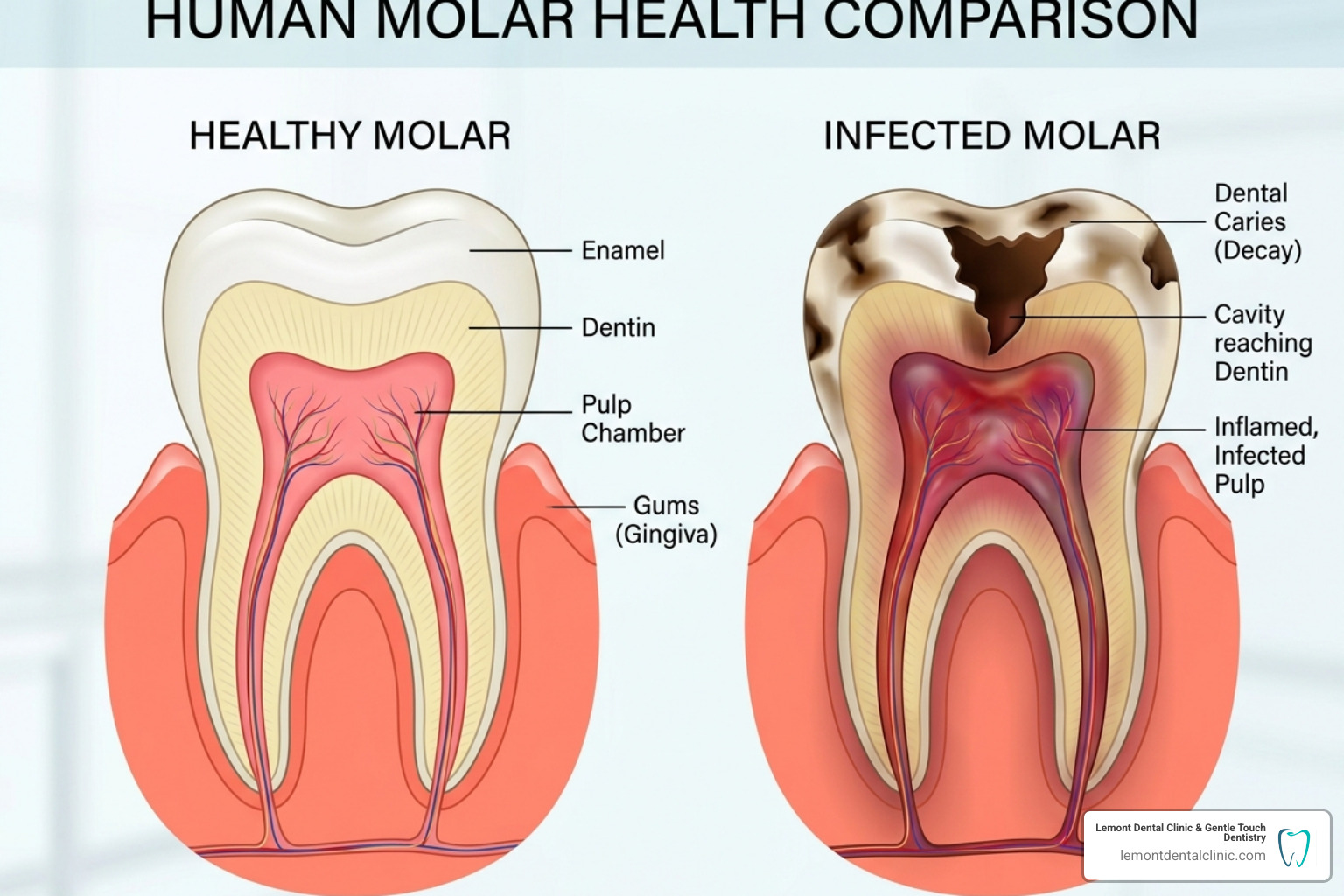
When we talk about a Root Canal, we are referring to a procedure that treats the very center of the tooth. Inside every tooth is a hollow area called the pulp chamber, which contains the dental pulp. This pulp is a collection of nerves and blood vessels that help the tooth grow during its developmental stages.
In pediatric dentistry, this is often referred to as pulp therapy. When a child develops a deep cavity or suffers a mouth injury, bacteria can enter this chamber, leading to a painful infection. According to research on Root Canal Treatment in Pediatric Dentistry, the goal of this therapy is to remove the diseased tissue, sterilize the inside of the tooth, and seal it up to prevent further decay. This allows the child to keep their natural tooth until it is ready to fall out on its own.
Signs your child may need child root canal therapy
Children aren’t always great at describing exactly what hurts, so we encourage parents in Lemont and Palos Hills to look for these specific “red flags”:
Tooth sensitivity: If your little one winces or complains when drinking cold juice or eating hot soup, the nerve may be inflamed.
Gum pimples: Also known as a fistula, these are small, pus-filled bumps on the gums near the tooth root. This is a classic sign of an abscess.
Tooth discoloration: A tooth that starts to look dark grey, yellow, or black often indicates that the internal pulp has died, usually due to past trauma.
Persistent ache: A dull, throbbing pain that doesn’t go away with brushing or flossing.
Nocturnal pain: If a toothache is waking your child up in the middle of the night, the infection has likely reached the pulp.
Common causes of pediatric pulp damage
The most frequent culprit is deep decay. When a cavity is left untreated, it eats through the hard enamel and dentin until it reaches the soft pulp. However, dental trauma is also a major factor. Whether it’s a fall on the playground or sports injuries during a soccer game in Hickory Hills, a hard hit to the mouth can sever the blood supply to the tooth or cause cracked enamel, allowing bacteria to seep in.
Why saving baby teeth is essential in 2026
It is a common misconception that primary teeth (baby teeth) don’t matter because “they’re just going to fall out anyway.” In reality, these teeth are the ultimate multitaskers. They act as natural space maintainers, holding the exact spot needed for the permanent teeth to erupt later.
Preserving these teeth through child root canal therapy ensures proper jaw development and speech clarity. If a child loses a molar at age five that wasn’t supposed to fall out until age twelve, the surrounding teeth will begin to tilt and drift into the empty space. You can read more about this in the Root Canal Treatment for Children | Parents’ Guide.
Risks of premature tooth loss
When a baby tooth is extracted too early instead of being saved, several complications can arise:
Bite misalignment: Shifting teeth lead to a “bad bite” (malocclusion).
Orthodontic issues: Crowded teeth often require expensive braces or aligners in the future.
Bone loss: The jawbone needs the tooth root to stay stimulated; without it, the bone in that area can begin to resorb.
Speech impediments: Missing front teeth can make it difficult for children to form certain sounds like “s” or “th.”
Types of pediatric pulp therapy: Pulpotomy vs. Pulpectomy
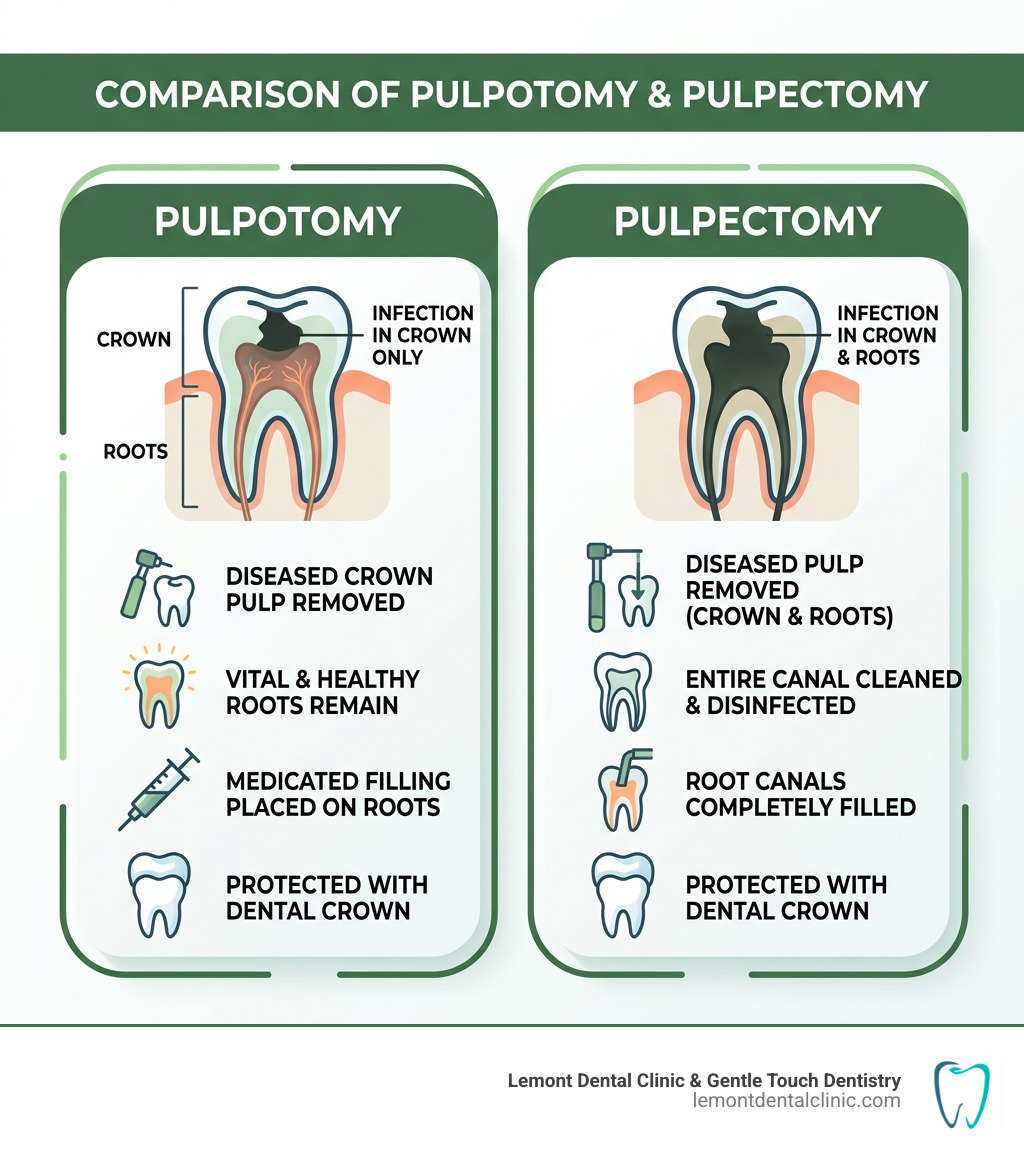
Not every child needs a “full” root canal. Depending on how far the infection has spread, we typically choose between two types of therapy.
The Pulpotomy procedure
A pulpotomy is often called a “mini root canal” or vital pulp therapy. It is performed when the decay has reached the pulp in the crown (the visible part of the tooth), but the healthy roots are still intact. We remove the diseased part of the pulp, place a medicated filling to “calm” the remaining nerve, and then protect the tooth with a dental crown.
The Pulpectomy procedure
A pulpectomy, or non-vital pulp therapy, is required when the infection has traveled all the way down into the root canals. In this case, we perform a full removal of the pulp tissue from both the crown and the roots. Because baby tooth roots eventually dissolve (resorb) to make way for adult teeth, we fill the canals with a special resorbable filling material rather than the permanent materials used for adults.
The step-by-step child root canal therapy process
At Lemont Dental Clinic & Gentle Touch Dentistry, we focus on making the process as “boring” as possible for the child—meaning no surprises and no pain.
Numbing: We start with a topical gel followed by local anesthesia. We often call this “sleepy juice” to help the child feel at ease.
Isolation: We use a rubber dam (a small “raincoat” for the tooth). This is vital because it keeps the tooth dry and prevents the child from tasting the antimicrobial solution used for disinfection.
Pulp Removal: We gently remove the damaged tissue using specialized pediatric instruments.
Sealing: The empty chamber is cleaned and filled with a biocompatible material.
Restoration: A crown is placed to ensure the tooth doesn’t crack later.
One of the most common questions we get is: Can You Eat After A Root Canal? The answer is yes, but you should wait until the “sleepy juice” has completely worn off to prevent your child from accidentally biting their cheek or tongue.
Is child root canal therapy painful?
Despite the old horror stories, modern child root canal therapy is remarkably comfortable. With modern anesthetics, the child should feel nothing more than a bit of a pressure sensation. To further anxiety reduction, our clinics in Palos Hills and Lemont offer various sedation options, ranging from “laughing gas” (nitrous oxide) to deeper sedation for very young or highly anxious patients. Our goal is to ensure the experience is no more stressful than a standard filling.
Restoring the tooth with a pediatric crown
Because a tooth becomes slightly more brittle after the pulp is removed, we must protect its structural integrity. We typically use:
Stainless steel crowns: The “gold standard” for back molars because they are incredibly durable.
Zirconia crowns: A tooth-colored, ceramic option for parents who want a more natural look.
These crowns provide total tooth protection until the baby tooth naturally falls out. If you’re wondering about the longevity of these treatments, check out our guide on How Long Does A Root Canal Last.
Recovery and aftercare for your child
Recovery is usually very quick. The numbing duration typically lasts between 2 to 4 hours. During this time, keep your child on a soft food diet. Think of things like yogurt, smoothies, applesauce, or mashed potatoes.
We also recommend:
Salt water rinses: A warm salt water rinse can help keep the gums clean and reduce minor irritation.
Activity restrictions: While most kids can go back to school the same day, they should avoid heavy contact sports for 24 hours.
Managing post-procedure discomfort
It is normal for the area to feel slightly tender for 24 to 72 hours. You can manage this with children’s ibuprofen or acetaminophen (always follow the dosage on the label for your child’s weight). If you notice slight puffiness, a cold compress applied to the outside of the cheek for 15-minute intervals can help with swelling management. If you have concerns during recovery, you can always reach out to a Children Dentist Near Me for a quick check-up.
Preventing the need for future root canals
The best root canal is the one you never have to get! We recommend a proactive approach:
Dental sealants: These are thin coatings painted on the chewing surfaces of back molars to “seal out” food and bacteria.
Fluoride treatments: These strengthen the enamel, making it more resistant to acid attacks.
Professional cleanings: Visit a Kids Dentist Near Me every six months to catch small cavities before they reach the pulp.
Mouthguards: If your child plays sports in the Orland Park or Oak Lawn areas, a custom mouthguard is the best insurance against dental trauma.
Daily habits: Brushing twice a day and flossing daily remains the foundation of a healthy smile.
Frequently Asked Questions about pediatric root canals
How long does a child’s root canal procedure take?
Typically, the procedure takes between 30-90 minutes. In the vast majority of cases, it is completed in a single visit. The duration depends on the complexity factors, such as which tooth is involved (molars have more canals than front teeth) and the child’s level of cooperation.
Can my child return to school the same day?
Yes! Once the local anesthesia wears off and they have had a soft snack, most children are perfectly fine to return to their normal school routine. There is no long “down time” required for pediatric pulp therapy.
What happens if we choose extraction instead?
If you choose to pull the tooth, you must consider the cost of space maintainers to prevent other teeth from shifting. Without a space maintainer, you are almost guaranteed to face high orthodontic costs later. Additionally, bone resorption can occur in the area where the tooth was removed, potentially complicating future dental work.
Conclusion
At Lemont Dental Clinic & Gentle Touch Dentistry, we understand that any talk of “surgery” or “root canals” for your child can be stressful. However, with our comprehensive pediatric care and advanced technology, we make the process smooth, affordable, and—most importantly—painless.
Whether you are in Lemont, Palos Hills, or surrounding areas like Worth or Romeoville, our team is here to help your child maintain a healthy, functional smile for years to come. If you suspect your child has a deep cavity or has suffered a tooth injury, don’t wait for the pain to get worse. Contact a Kids Dentist Near Palos Hills today for an evaluation. We look forward to treating your entire family with the care and quality you deserve.