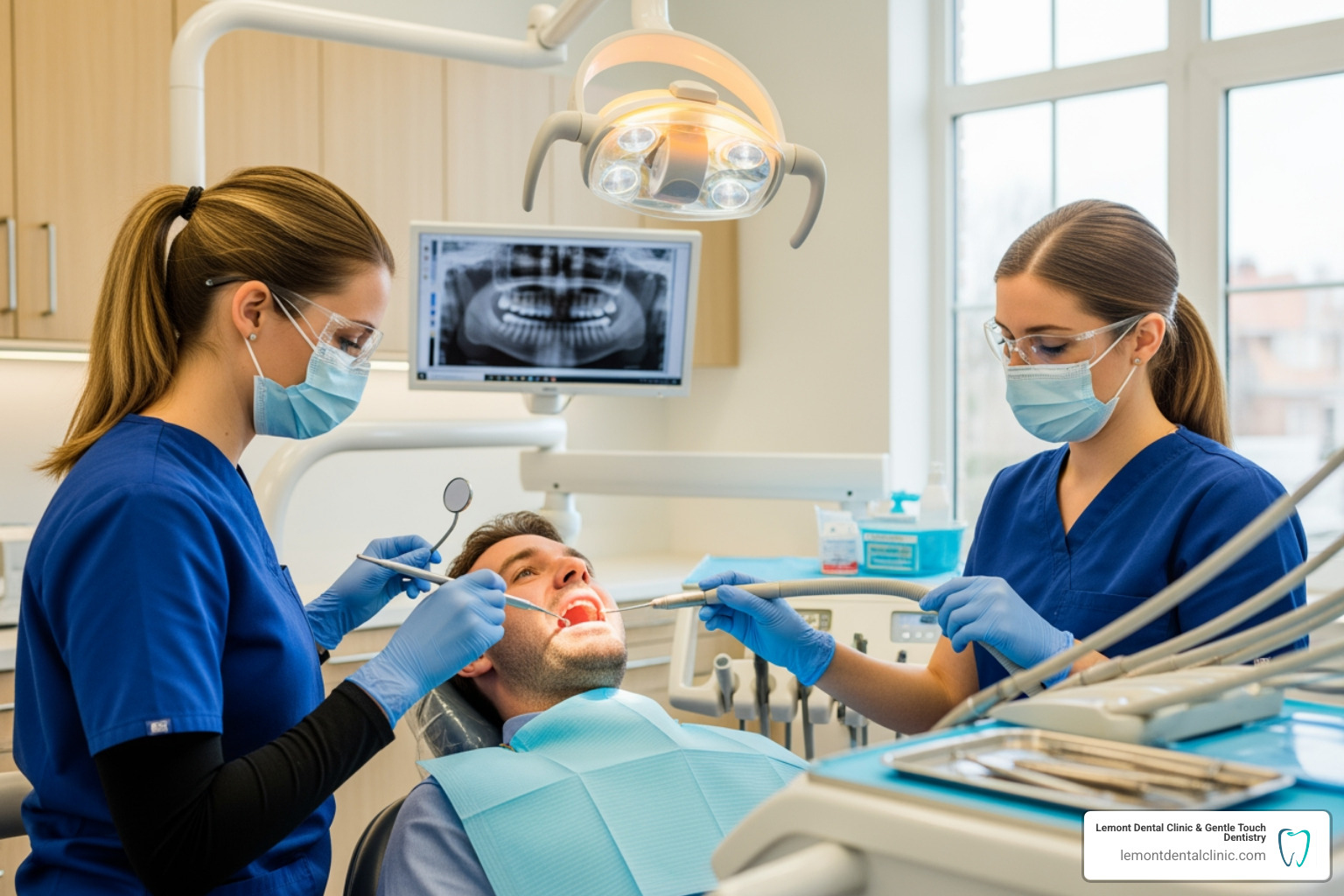
Receding gums teeth cleaning is essential for managing gum recession and preventing further damage. Here’s what you need to know:
Professional cleaning removes the plaque and tartar buildup that causes gum recession.
Regular cleanings (twice yearly) help prevent gum disease before it starts.
Deep cleaning (scaling and root planing) treats existing gum recession by removing tartar below the gum line.
Early treatment can halt the progression of recession and prevent tooth loss.
Gum tissue cannot grow back, but proper cleaning can prevent the condition from worsening.
Do your teeth look longer than they used to? It could be gum recession, a common condition where gum tissue pulls away from your teeth, exposing the roots. It affects a significant number of adults, with approximately 88% of people over 65 experiencing it on at least one tooth.
Because it develops gradually, early signs like tooth sensitivity are easy to miss. If untreated, gum recession can create pockets where bacteria thrive, leading to bone and tooth loss. The good news is that professional teeth cleaning is critical for managing gum recession. While receded gums don’t grow back, the right cleaning approach can halt the progression and protect your oral health.
I’m Piotr Dederowski of Lemont Dental Clinic & Gentle Touch Dentistry. I’ve helped many patients manage gum recession with proper cleaning techniques and personalized plans. This guide will explain what you need to know to protect your gums and maintain your oral health.
What is Gum Recession and What Causes It?
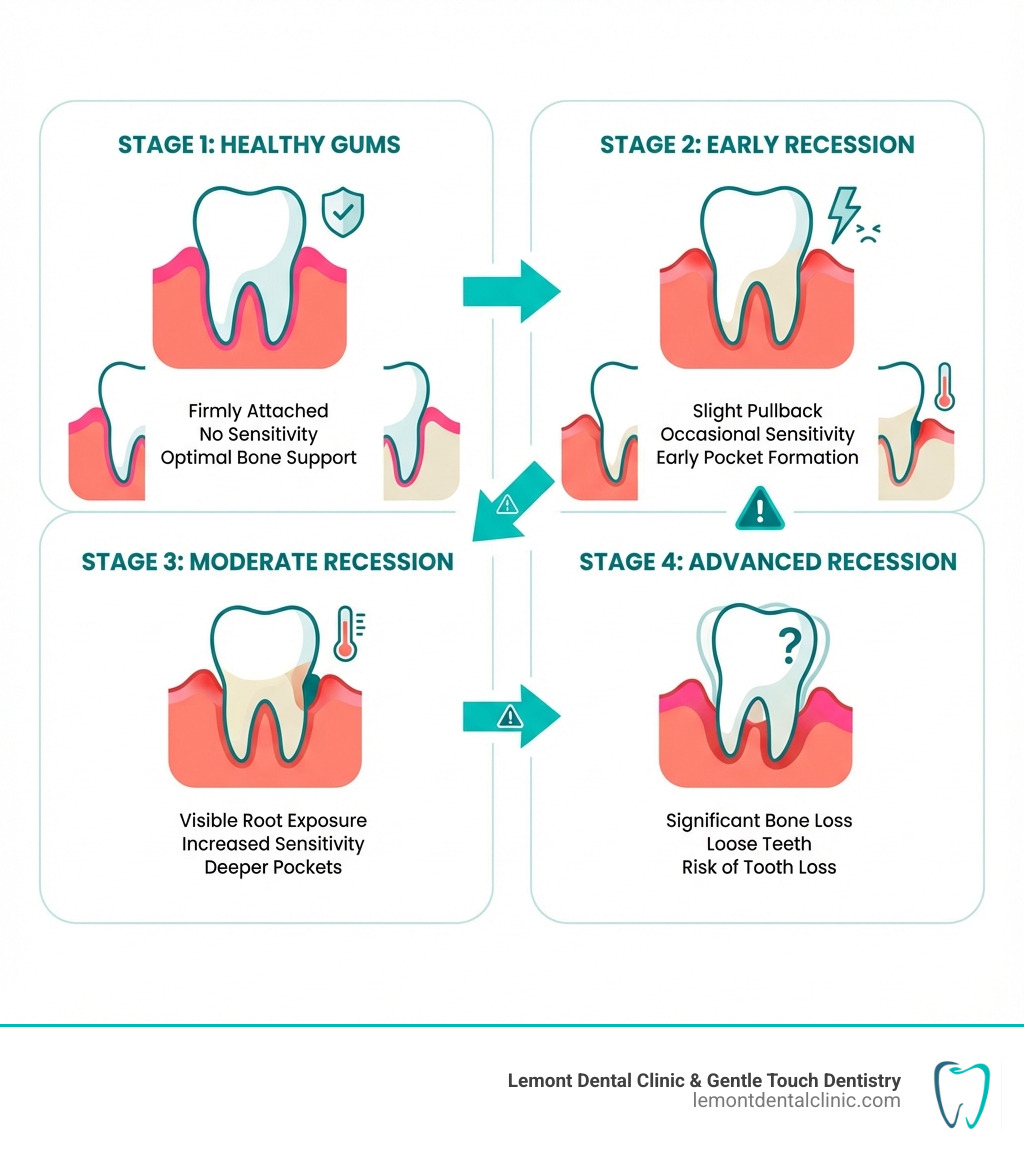
Gum recession is when the gum tissue pulls back, exposing more of the tooth and its root. It’s more than a cosmetic issue; it’s often a sign of gum disease (periodontal disease) caused by bacterial plaque.
The main cause is plaque and tartar buildup. Plaque, a sticky bacterial film, hardens into tartar if not removed daily. Tartar irritates the gums, causing inflammation (gingivitis). If untreated, this can progress to periodontitis, a more severe form of gum disease. In periodontitis, inflammation causes gums to pull away from teeth, forming pockets. Healthy pockets are 1-3 mm deep; with periodontitis, they can be 5 mm or more. These pockets harbor bacteria that destroy supporting bone, potentially leading to tooth loss. Learn more about this on our page about Periodontal Disease: The Sneaky Enemy of Teeth.
Beyond bacterial infections, other factors can contribute to gum recession:
Aggressive Brushing: Brushing too hard or with a hard-bristled brush can wear away gum tissue. It’s important to be thorough, not aggressive.
Genetics: Some people are genetically predisposed to gum disease, making them more susceptible to recession even with good oral care.
Tobacco Use: Tobacco use increases your risk of gum recession and hinders the healing of damaged gum tissue.
Misaligned Teeth: Crooked or crowded teeth are harder to clean and can put uneven pressure on gums, leading to recession.
Teeth Grinding (Bruxism): Clenching or grinding your teeth puts excessive force on your gums, which can contribute to recession.
Hormonal Changes: Hormonal changes during puberty, pregnancy, or menopause can make gums more sensitive and vulnerable to recession.
Oral Piercings: Lip or tongue piercings can rub against and irritate gum tissue, causing localized recession.
Signs and Symptoms to Watch For
Gum recession often develops gradually, so recognizing the signs early is key for treatment. Here’s what to look for:
Visible Tooth Roots: The most obvious sign is seeing the yellowish root of your tooth as gums pull back, making teeth look longer.
Increased Tooth Sensitivity: Exposed tooth roots lack protective enamel, making them highly sensitive to hot, cold, sweet, or acidic foods and drinks. If you’re wondering, “Why Does My Tooth Hurt?“, receding gums could be the answer.
Bleeding Gums: Gums that bleed when you brush or floss are a classic sign of gingivitis, the earliest stage of gum disease.
Red or Swollen Gums: Red, puffy, or swollen gums indicate inflammation, whereas healthy gums are firm and pink.
Persistent Bad Breath (Halitosis): Bacteria in the pockets created by recession can cause chronic bad breath.
Change in Tooth Appearance: You might notice new gaps or “black triangles” appearing between your teeth near the gum line.
Loose Teeth: In advanced stages, significant bone damage can cause teeth to become loose.
If you notice any of these symptoms, schedule an appointment with us promptly. Early diagnosis is key to managing gum recession.
The Critical Role of Receding Gums Teeth Cleaning
Professional receding gums teeth cleaning is a vital defense against the progression of gum recession. At Lemont Dental Clinic & Gentle Touch Dentistry, our team provides thorough cleanings that are essential for preventing gum disease and go beyond what you can achieve at home.
The main goal of professional cleaning for gum recession is to remove the plaque and tartar buildup that fuels gum disease. Tartar cannot be removed by brushing alone and creates a rough surface for more bacteria, leading to irritation that causes gums to recede. Removing these deposits halts gum disease, reduces inflammation, and helps your gums heal. While gum tissue doesn’t grow back, stopping the disease prevents further recession and protects exposed tooth roots.
According to the American Dental Association, professional cleanings are essential for maintaining healthy gums and preventing periodontal disease progression.
How Regular Cleaning Helps Maintain Gum Health
Regular professional cleanings, usually twice a year, are your first line of defense. During these appointments, our skilled hygienists will:
Remove Plaque and Tartar: Using specialized instruments, we remove plaque and tartar from tooth surfaces and along the gum line, preventing the irritation that leads to gingivitis.
Prevent Gingivitis: Keeping teeth free of plaque and tartar helps prevent gingivitis, the reversible first stage of gum disease. This is crucial, as untreated gingivitis can progress to periodontitis and cause irreversible recession.
Polish Your Teeth: After removing deposits, your teeth are polished to remove stains and create a smooth surface that resists plaque.
Identify Early Issues: These visits allow us to monitor your oral health, spot early signs of gum issues, and offer guidance on your home care routine.
Our Regular Cleaning service is designed to keep your gums healthy and prevent problems before they start.
When Deep Cleaning is Necessary for Receding Gums
If gum disease progresses beyond gingivitis, you may develop periodontal pockets deeper than 3 millimeters. Pockets of 5 mm or more indicate periodontal disease, requiring a “deep cleaning.”
Deep cleaning, also known as scaling and root planing, is an intensive procedure to treat gum disease by removing plaque and tartar below the gum line. This procedure is recommended when:
Periodontal Pockets are Present: Pockets greater than 5 millimeters harbor bacteria that your toothbrush and floss can’t reach.
Tartar is Below the Gum Line: Deep cleaning targets hardened deposits on the tooth roots beneath the gum tissue.
Gum Disease Needs Treatment: Deep cleaning is the primary non-surgical treatment for early to moderate gum disease.
Your dentist will recommend deep cleaning after an exam that includes measuring your periodontal pockets. The procedure is crucial for stopping gum disease and allowing your gums to heal and reattach to the clean root surfaces. For more detailed information, visit our page on Deep Cleaning.
A Closer Look at Deep Cleaning (Scaling and Root Planing)
Deep cleaning, or scaling and root planing, is a specialized treatment for receding gums teeth cleaning. It goes beyond a routine cleaning to remove tartar buildup below the gum line, a vital step in managing gum disease.
The two-part procedure may require one or more appointments:
Scaling Procedure: After numbing the area with a local anesthetic, we use specialized instruments (ultrasonic devices and hand scalers) to remove all plaque and tartar from above and below the gum line. This eliminates the bacteria causing inflammation.
Root Planing Procedure: Next, we perform root planing, which involves smoothing the tooth roots. This removes areas where bacteria can gather and helps the gums reattach firmly to the clean, smooth surface.
This non-surgical treatment is highly effective at removing the cause of gum disease. Our goal is to reduce pocket depth, stop gum bleeding, and prevent bone and tooth loss. You can find more information from the American Academy of Periodontology about Non-surgical periodontal treatment.
The Pros and Cons of Deep Cleaning for Receding Gums
It’s important to weigh the advantages and disadvantages of deep cleaning before proceeding with treatment for receding gums teeth cleaning.
Advantages (Pros)
Disadvantages (Cons)
Stops Gum Disease: Removes plaque and tartar below the gum line, halting gum disease.
Potential for Sensitivity: Temporary tooth sensitivity to hot and cold, which usually subsides in a few weeks.
Protects Tooth Roots: Prevents further damage and decay to exposed root surfaces.
Post-Procedure Discomfort: Manageable soreness, tenderness, or minor swelling is common.
Prevents Tooth Loss: Reduces the risk of tooth loss by managing gum disease and preserving bone.
Gum Recession (Temporary): After inflammation subsides, gums may appear slightly more receded.
Fights Bad Breath: Eliminates bacteria that cause bad breath from gum disease.
Risk of Infection (Rare): A slight risk of infection exists, which may require antibiotics.
Promotes Healthy Gums: Helps gums reattach to teeth, reducing pocket depth and inflammation.
Nerve Damage (Extremely Rare): Extremely rare with skilled professionals.
Cost Consideration: Less costly and invasive than surgical treatments for advanced gum disease.
Multiple Visits: Often requires multiple 1-2 hour visits to treat the whole mouth.
The benefits of deep cleaning in stopping gum disease generally outweigh the temporary discomforts.
Aftercare and Potential Side Effects
Following a deep cleaning, some temporary side effects are normal. We’ll provide detailed instructions, but here are some general aftercare steps:
Wait Before Eating: Wait to eat until the anesthetic wears off to avoid biting your tongue or cheek.
Soft Food Diet: Stick to soft foods for a few days to avoid irritating your gums.
Avoid Extreme Temperatures: Avoid very hot or cold foods and drinks due to temporary sensitivity.
Gentle Brushing and Flossing: Continue your oral hygiene routine gently, especially around treated areas, using a soft-bristled brush.
Saltwater Rinses: Rinse with warm salt water (1/2 tsp salt in 8 oz water) to soothe gums and promote healing.
Pain Management: Use over-the-counter pain relievers for any discomfort.
Temporary Sensitivity: Tooth sensitivity is a common side effect that usually subsides in a few weeks. We may recommend desensitizing toothpaste. For more tips, check out our article: Teeth Sensitive After Cleaning – What Now?.
Minor Bleeding and Swelling: Slight bleeding and swelling for a day or two is normal. A cold compress can help.
Gum Appearance: As inflammation subsides, your gums will look tighter. This may make teeth look longer or create small gaps (“black triangles”).
If you experience persistent or severe pain, bleeding, or swelling, please contact us immediately.
Healing, Reversibility, and Other Treatment Options
After a deep cleaning, your gums begin to heal, a process requiring patience and good oral hygiene. Initial healing takes about a week, but complete healing and reattachment can take 6 to 8 weeks. During this time, the gum tissue forms a tighter seal around the teeth, reducing the periodontal pockets.
Can Gum Recession Be Reversed?
A common question about receding gums teeth cleaning is whether it can be reversed. Unfortunately, lost gum tissue cannot grow back on its own.
However, the progression of gum recession can be stopped, and gum health can be significantly improved. Mild gingivitis, for example, is completely reversible with professional cleaning and good home care. For actual gum recession, our focus is on managing the condition:
Halting Progression: Deep cleaning stops the underlying gum disease that causes recession by removing bacterial irritants.
Restoring Health: The remaining gum tissue can become healthier and firmer, reducing sensitivity and protecting the roots.
Preventing Further Loss: Excellent oral hygiene and addressing the causes will prevent further recession.
So, while we can’t regrow lost gum tissue, we can reverse the disease process and restore your gums to a stable, healthy state.
Advanced Treatments for Severe Gum Recession
For severe gum recession, where deep cleaning isn’t enough, we may recommend advanced treatments, often performed by a gum specialist (periodontist).
Here are some advanced options:
Gum Graft Surgery: This is a predictable, long-lasting treatment for significant recession. A small piece of tissue from your mouth or a donor source is stitched over the receded area to cover the exposed root. This reduces sensitivity and protects against further damage. Recovery takes about two weeks.
Dental Bonding: For mild recession, we can apply a tooth-colored resin to the exposed root. This camouflages the area, reduces sensitivity, and protects the root.
Orthodontics: If misaligned teeth are a cause, orthodontics can move teeth into better positions, improving the gum line and making cleaning easier.
Regenerative Procedures: In cases with bone loss, regenerative procedures use special materials to encourage your body to regrow lost bone and tissue.
At Lemont Dental Clinic & Gentle Touch Dentistry, we offer comprehensive General Dentistry Services and work with specialists to ensure you receive the most appropriate treatment.
How to Prevent Gum Recession and When to See a Dentist
Preventing gum recession is a team effort. While you can’t change genetics, you can control many causes through diligent oral hygiene and regular professional care.
Here’s how you can protect your gums:
Proper Brushing Technique: Brush gently twice a day for two minutes. Use a soft-bristled toothbrush at a 45-degree angle to your gums with short, circular strokes. Avoid aggressive scrubbing.
Daily Flossing: Floss daily to remove plaque from between teeth and under the gum line. Be gentle, curving the floss around each tooth.
Regular Dental Visits: Visit us for cleanings and check-ups at least twice a year to remove tartar and monitor your gum health.
Balanced Diet: Eat a balanced diet and limit sugary, acidic foods and drinks that contribute to plaque.
Avoiding Tobacco: Quitting tobacco is one of the best things you can do for your gums, as it increases disease risk and hinders healing.
Manage Teeth Grinding (Bruxism): If you grind your teeth, a custom nightguard can protect your teeth and gums from excessive force.
Address Misaligned Teeth: If you have crooked teeth, consider discussing orthodontic options with us.
By adopting these practices, you can significantly reduce your risk of gum recession.
When to Schedule a Dental Appointment
Knowing when to seek professional help is key. Don’t delay a visit if you have concerns, as gum recession can be subtle.
You should schedule an appointment if you notice any of the following:
Your teeth look longer, or you can see their roots.
New or worsening sensitivity to hot, cold, or sweet foods.
Gums that are bleeding, red, or swollen.
Chronic bad breath.
Loose teeth (a sign of advanced gum disease).
Persistent pain in your gums or teeth.
Even without symptoms, routine Check-ups are vital for early detection. Early diagnosis leads to less invasive, more effective treatment. Don’t wait for a small problem to become a large one!
Conclusion
Understanding receding gums teeth cleaning is crucial for a healthy smile. We’ve seen how gum recession, caused by factors like plaque buildup or aggressive brushing, can lead to sensitivity and even tooth loss if untreated.
The good news is that professional cleaning is essential for management. While gum tissue doesn’t regrow, regular and deep cleanings effectively halt gum disease and help your gums heal. Advanced treatments like gum grafting are also available for severe cases.
Prevention is key. Proper brushing, daily flossing, and avoiding tobacco can significantly reduce your risk. Regular dental check-ups are your best defense for catching issues early before they escalate.
At Lemont Dental Clinic & Gentle Touch Dentistry, we are committed to providing high-quality, comprehensive general and restorative dental care right here in Lemont and Palos Hills, IL. We pride ourselves on offering all-in-one care, combining experienced doctors, the latest technology, and competitive prices to ensure you receive quality and affordable treatment.
Don’t let gum recession compromise your oral health or your confidence. Take control of your gum health today. We are here to guide you every step of the way, providing the expertise and care you need. Schedule your next professional cleaning today and let us help you maintain a healthy, beautiful smile for a lifetime.