Your Guide to Dental Implants and Periodontal Expertise
A dental implants periodontist is a specialist who places dental implants while managing the health of your gums and supporting bone. Understanding their role is key to achieving the best outcome for your smile if you’re considering implants.
Key Facts About Dental Implants and Periodontists:
What They Are: Periodontists are specialists with 3+ years of advanced training beyond dental school, focusing on gum disease, bone health, and surgical implant placement.
Why They Matter: They are experts in both the soft tissues (gums) and hard tissues (bone) that are critical for successful implant integration.
What They Do: They surgically place titanium implant posts into your jawbone, perform bone grafting when needed, and manage complications like peri-implantitis.
Who They Help: Ideal candidates have good oral health and adequate jawbone, but periodontists can also help those with bone loss or gum disease through specialized procedures.
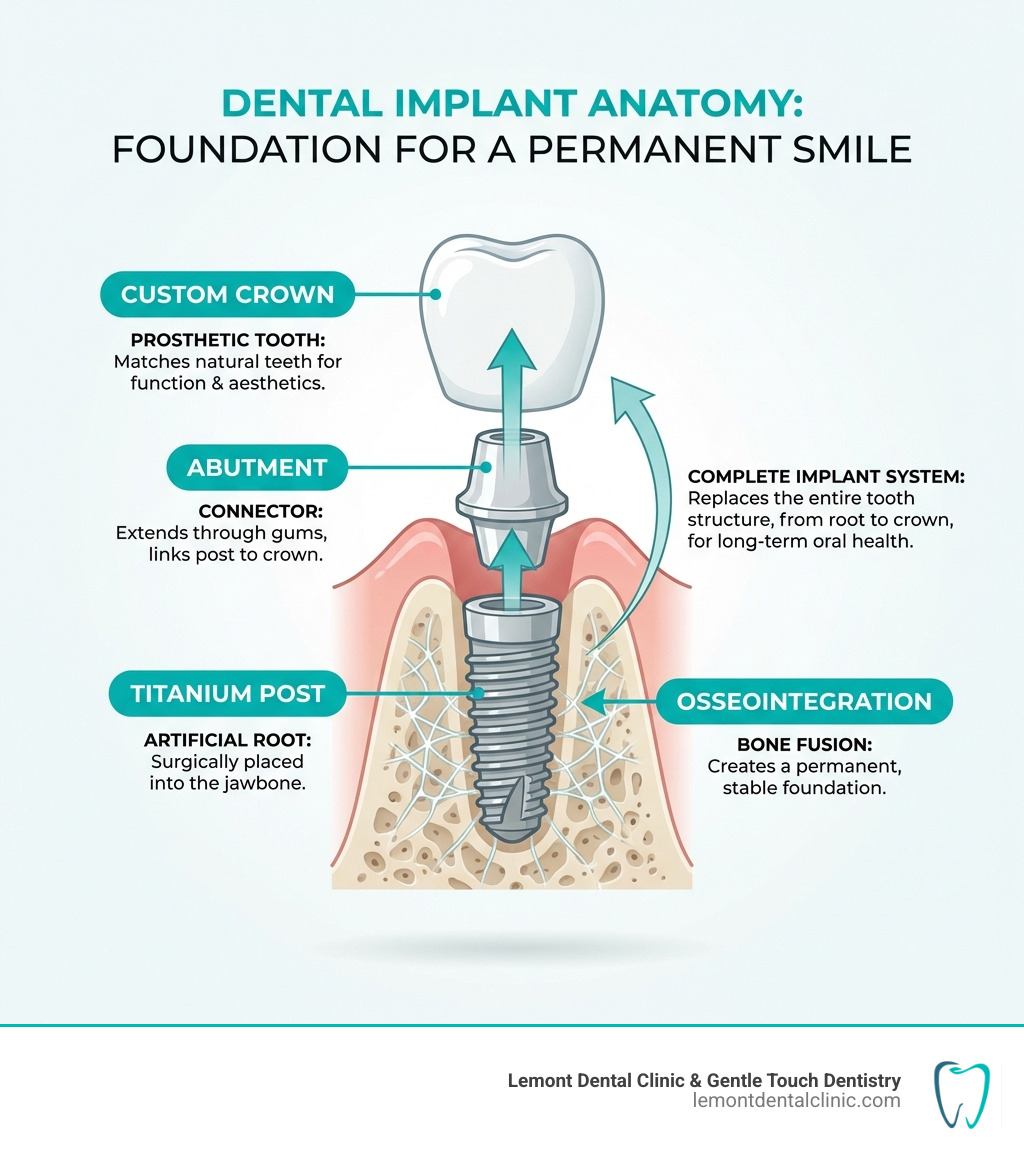
Losing a tooth means losing the root that stimulates your jawbone. Dental implants are the only solution that replaces both the crown and the root. They consist of a titanium post (artificial root), an abutment, and a custom crown that looks and functions like a natural tooth.
The process of osseointegration, where your jawbone fuses with the titanium implant, is what makes them so stable and long-lasting, with success rates over 90% a decade after placement. This fusion prevents bone loss, preserving your facial structure and oral health.
A periodontist is uniquely qualified for this process. Their specialized training makes them experts in evaluating bone, performing surgery, and managing gum tissues. They can also perform advanced procedures like bone grafting or sinus lifts when your jaw needs extra support for an implant.
I’m Piotr Dederowski, and at Lemont Dental Clinic & Gentle Touch Dentistry, we’ve placed hundreds of dental implants over the years, helping patients restore their smiles with the expertise of a skilled dental implants periodontist. Our commitment is to provide you with comfortable, high-quality care that addresses both your immediate needs and your long-term oral health.
Understanding Dental Implants: The Gold Standard for Tooth Replacement
Losing a tooth impacts your ability to chew and your confidence. While bridges and dentures are options, they don’t replicate the natural function and health benefits of real teeth. Dental implants are the gold standard for tooth replacement.
A dental implant is a replacement for a missing tooth root, typically made of biocompatible titanium. This screw-like fixture is surgically placed into the jawbone, acting as a sturdy anchor for a replacement tooth. Implants stimulate the jawbone, preventing the bone loss that occurs when a tooth is lost and helping maintain your facial structure.
Dental implants mimic natural teeth effectively. Unlike slipping dentures or bridges that require altering healthy teeth, implants are a fixed, stable solution. This stability lets you eat, speak, and laugh without worry.
Implants restore up to 90% of your natural biting force, improving nutrition and overall health. They also support your facial structure by replacing the tooth root, which preserves the jawbone and prevents a sunken appearance. This prevents adjacent teeth from shifting, which can cause bite problems.
Osseointegration: The Foundation of Implant Success
The stability and longevity of dental implants come from a biological process called osseointegration. After the titanium implant is placed, your jawbone grows around and fuses with it over several months, creating a strong, stable anchor.
Titanium’s biocompatibility is key, as it integrates seamlessly with human bone. This bone fusion is critical for long-term success and typically takes three to nine months. Without it, the implant cannot support a restoration. The success rate of dental implants often exceeds 90% even a decade after placement. With proper care, many implants can last for 30 years or more, making them a wise investment in your oral health.
The Role of the Dental Implants Periodontist: A Specialist’s Touch
For a procedure as intricate as dental implants, you want a specialist. A dental implants periodontist has completed an additional three years of training beyond dental school, focusing on gum disease, surgical implant placement, and the health of your gums and jawbone.
A periodontist is an expert in the soft and hard tissues of the mouth, making them uniquely qualified to assess bone quality, manage gum health, and perform precise implant surgery. They are adept at handling complex cases involving bone loss or gum disease. Find out more about finding the right expert at Best Teeth Implant Doctors Near Me.
What Makes a Dental Implants Periodontist the Ideal Choice?
Choosing a dental implants periodontist from our team means entrusting your smile to a professional with a deep understanding of the oral environment. Their specialized skills include:
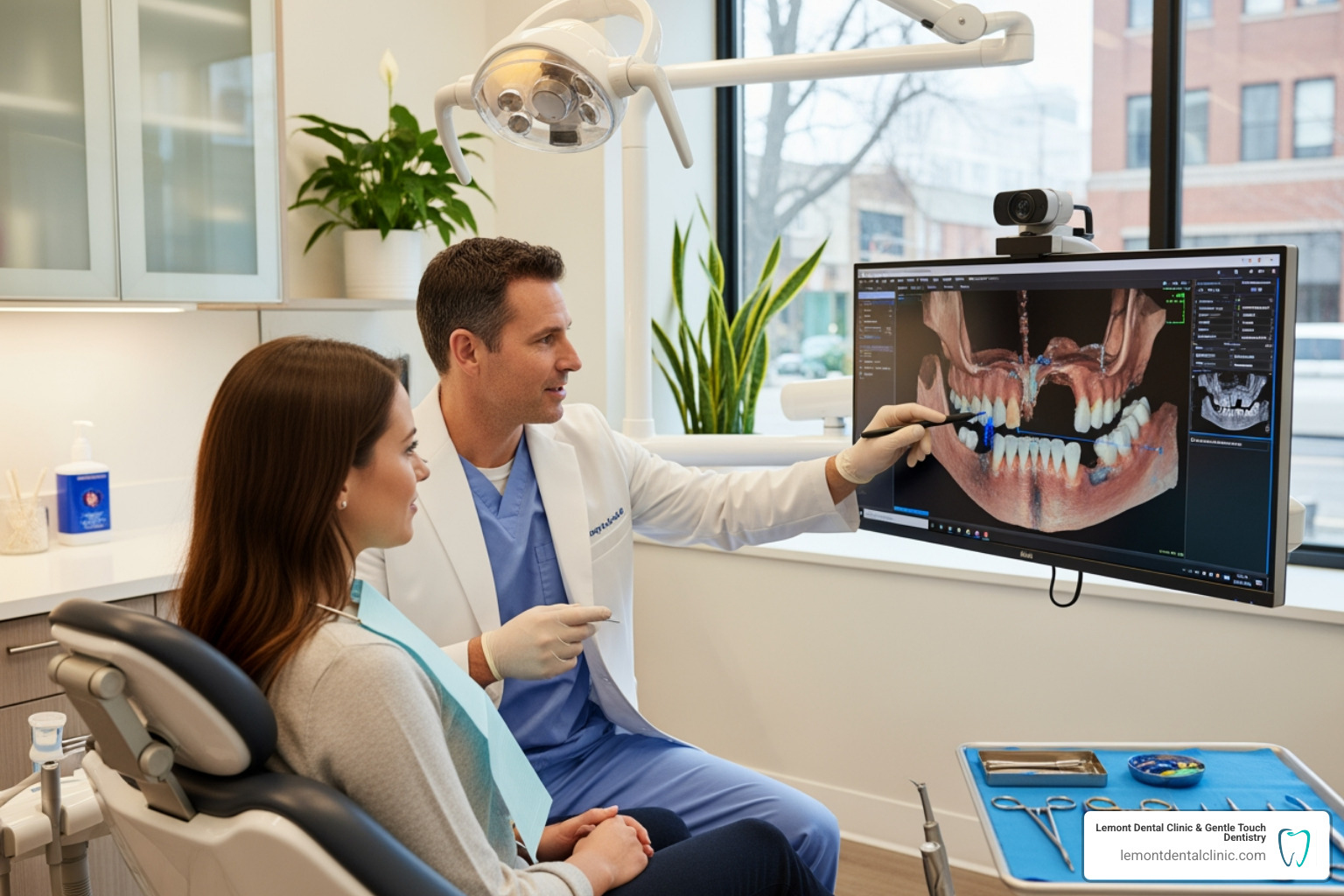
Assess and Prepare: They carefully evaluate your oral health, including gum and bone density, often using 3D imaging to plan the exact implant placement.
Perform Advanced Surgical Techniques: Their training includes complex procedures like gum and bone grafting to create a stable foundation for implants.
Manage Complications: A periodontist is expertly trained to diagnose and treat issues like peri-implantitis (implant-related gum disease), helping to save your implant.
Ensure Aesthetic Outcomes: They have the knowledge to ensure functional success and beautiful results, including aesthetic gum contouring for a harmonious smile.
Sometimes, a patient’s jaw or gums aren’t ready for an implant. This is where a periodontist’s specialized skills are vital. Our periodontists perform advanced procedures to create the optimal conditions for implant success:
Sinus Augmentation (Sinus Lift): When upper back teeth are lost, the sinus can expand, leaving insufficient bone for implants. A sinus lift restores bone height in this area, making implant placement possible.
Ridge Modification: If the jaw ridge is deformed or has inadequate bone, a periodontist can build it up using bone grafts to create a solid foundation.
Bone Grafting: This procedure adds bone material to deficient areas of the jawbone to ensure the implant has enough support. The bone can be from your own body, a donor, or synthetic materials.
Soft Tissue Grafts: If there isn’t enough healthy gum tissue at the implant site, a periodontist can perform a graft to improve both the health and aesthetics around the implant.
Implant Site Development: When a tooth is extracted, a periodontist can perform bone grafting at the same time to preserve the socket and prepare the site for a future implant.
The Dental Implant Journey: From Consultation to Final Crown
The path to a restored smile with dental implants is a personalized journey that generally follows a clear sequence of steps for optimal success.
Initial Consultation and Planning
Your journey begins with a consultation at our clinic. We’ll perform a comprehensive exam, review your medical history, and discuss your goals. Using advanced 3D imaging, we evaluate your bone and surrounding structures to create a customized treatment plan for precise implant placement.
Surgical Placement
Next is the surgical placement, an outpatient procedure performed under local anesthesia (sedation is also available). Our periodontist makes a small incision, prepares the jawbone, and inserts the titanium implant post before closing the gum tissue with stitches.
Healing Period (Osseointegration)
After surgery, the healing period begins. During this time, osseointegration occurs as your jawbone fuses with the implant. This phase takes three to nine months, after which the implant is a stable part of your jaw. A temporary restoration may be provided for aesthetic purposes while you heal.
Abutment Placement and Final Restoration
Once osseointegration is complete, the abutment (a connector post) is attached to the implant. This may require a minor procedure to expose the implant. After the gums heal, your custom crown, bridge, or denture is attached, completing your new, functional, and aesthetic smile.
Are You a Good Candidate for Dental Implants?
Ideal candidates for dental implants are typically non-smokers in good general and oral health. Key considerations include:
Good Oral Health: Gums should be healthy and free of periodontal disease, which must be treated first.
Adequate Jawbone Density: Sufficient bone is needed to support the implant. Bone grafting can often prepare the site if density is lacking.
Commitment to Oral Hygiene: Long-term success relies on diligent home care and regular dental check-ups.
Overall Health: We will carefully review your medical history, as certain chronic illnesses can interfere with healing.
Dental implants are versatile and can address a wide range of tooth loss scenarios:
Single Tooth Replacement: A single implant and crown can replace one tooth without affecting adjacent teeth.
Multiple Teeth Replacement: Strategically placed implants can support a permanent bridge to restore several missing teeth in a row.
Implant-Supported Bridges: Implants anchor a bridge, providing superior stability and preserving bone compared to conventional options.
Implant Dentures: Implants provide incredible stability for dentures, eliminating slipping and the need for adhesives.
Full Arch Restoration (All-on-4®): This technique replaces an entire arch of teeth using just four precisely placed implants, often in a shorter timeframe. Learn more at Best All On 4 Dental Implants Near Me.
Life With Dental Implants: Benefits, Risks, and Long-Term Care
Choosing dental implants is a long-term investment in your oral health and well-being, offering benefits that other options can’t match.
A World of Benefits
The advantages of dental implants go beyond simply filling a gap:
Improved Chewing Ability: Regain nearly 90% of your natural chewing power and enjoy a wider variety of foods.
Improved Speech: Implants provide a stable foundation, allowing you to speak clearly and without hesitation.
Natural Appearance: Custom-designed crowns blend seamlessly with your existing teeth for a natural look.
Durability and Longevity: With proper care, implants can last for decades, often a lifetime, far outlasting bridges or dentures.
Preservation of Jawbone: Implants stimulate the jawbone, preventing the bone loss that can lead to a “sunken” facial appearance.
Improved Oral Health: Implants don’t require altering adjacent teeth, preserving their natural structure and making hygiene easier.
Can look natural, but may appear bulky or artificial
Oral Hygiene
Easy to clean, like natural teeth
More challenging to clean around and under
Requires removal for cleaning, can harbor bacteria
Potential Risks and Signs of Failure
While dental implants have a high success rate, potential risks exist, though they are rare and treatable. Our skilled dental implants periodontist team takes every precaution to minimize these risks.
Potential issues include:
Infection (Peri-implantitis): An infection around the implant that can cause bone loss. Good oral hygiene is the best prevention.
Nerve Damage: Rarely, implant placement can affect nerves, causing numbness or pain. Our 3D imaging helps minimize this risk.
Sinus Issues: An implant in the upper jaw can protrude into the sinus cavity. Sinus augmentation procedures help prevent this.
Failed Osseointegration: The implant may not fuse with the jawbone due to insufficient bone, infection, smoking, or certain medical conditions.
It’s crucial to recognize warning signs like persistent pain, swelling, or a loose implant. Contact us promptly if you experience any of these, as early intervention can often save the implant.
Caring for Your Implants for a Lifetime of Smiles
The longevity of your dental implants depends on your care. Your implants require the same diligent care as natural teeth.
Daily Brushing and Flossing: Brush twice a day and floss daily, paying special attention to the areas around your implants. Interdental brushes or water flossers can be effective.
Regular Dental Checkups: Maintain routine visits to our clinic to monitor the health of your implants and gums.
Avoid Hard Foods and Habits: Chewing on extremely hard items or using your teeth as tools can damage your restorations.
Quit Smoking: Smoking significantly increases the risk of implant complications and failure.
Adhering to these care practices can ensure your implants remain healthy and beautiful for a lifetime.
Understanding the Investment in Your Smile
It’s natural to consider the cost of dental implants. While the initial investment is higher than other options, implants are a long-term investment in your health and confidence. Their durability often makes them the most cost-effective solution over time. Learn more with our Dental Implants Cost Estimate.
Several factors influence the overall cost:
Number of Implants: The cost varies based on how many teeth are being replaced.
Need for Grafting: Preparatory procedures like bone grafting or sinus lifts will affect the total cost.
Type of Restoration: The final restoration (crown, bridge, or denture) influences the price.
Material and Technology: The quality of materials and advanced technology used contribute to the cost.
At Lemont Dental Clinic & Gentle Touch Dentistry, we provide transparent pricing and offer various payment solutions. We are committed to offering competitive prices for high-quality care in Lemont and Palos Hills, IL, ensuring you receive exceptional value. To explore your options, please visit our Service Post: Implant Financing.
Frequently Asked Questions about Dental Implants and Periodontists
Here are answers to some common questions about dental implants.
How long do dental implants last?
With proper care, dental implants can last for decades, often a lifetime. This is a major advantage over bridges (7-10 years) and dentures (5-10 years). While the crown on top may eventually need replacement due to wear, the titanium post that integrates with your jawbone is a permanent fixture.
Is the dental implant procedure painful?
Your comfort is our priority. The procedure is not painful, as we use effective local anesthesia to numb the area. Many patients find it more comfortable than expected, and we offer sedation for those with dental anxiety. Post-surgery discomfort is typically mild and manageable with over-the-counter pain relievers, with most patients returning to normal activities in a day or two.
Why is it important to choose the right dental implants periodontist?
Choosing a qualified dental implants periodontist is crucial for success. They have three years of specialized training beyond dental school, focusing on the relationship between gums, jawbone, and implants. This expertise allows them to:
Accurately Assess Bone and Gum Health: They are skilled at evaluating the foundations for a stable implant.
Perform Complex Procedures: They are the most qualified specialists for procedures like bone grafting and sinus lifts.
Minimize Risks and Manage Complications: Their in-depth knowledge helps prevent issues and treat complications like peri-implantitis.
Achieve Optimal Outcomes: A periodontist ensures your new tooth is both functional and aesthetically pleasing.
At Lemont Dental Clinic & Gentle Touch Dentistry, our periodontists’ specialized skills ensure your dental implant journey leads to a successful, healthy, and beautiful smile.
Partner with an Expert for Your New Smile
Choosing a dental implant specialist is a critical step toward restoring your smile and oral health. A periodontist offers unparalleled expertise in the foundational structures of your teeth—the gums and jawbone—ensuring your implant has the strongest possible support for long-term success. At Lemont Dental Clinic & Gentle Touch Dentistry, our experienced team provides comprehensive, all-in-one care to guide you through the entire process. For a permanent, confident, and healthy smile, explore your dental implant options with us today.