Why Learning How to Brush Your Teeth Properly Changes Everything
How to brush your teeth correctly is the single most important skill for maintaining oral health. Here’s the quick answer:
Use a soft-bristled toothbrush and fluoride toothpaste
Angle the brush at 45 degrees toward your gumline
Brush for two minutes, twice daily
Use gentle, circular motions on all tooth surfaces
Don’t forget your tongue to remove bacteria
Wait to rinse – spit out excess toothpaste but don’t rinse immediately
Many people believe they brush correctly, but studies show poor technique often misses over a third of tooth surfaces. This allows plaque—the sticky film of bacteria on your teeth—to cause damage. Within 24 hours, it can harden into tartar (calculus), which only a professional cleaning can remove.
The stakes are high. Poor oral hygiene is linked to more than just cavities and gum disease; research connects oral bacteria to serious conditions like heart disease, diabetes, and pneumonia as bacteria can enter the bloodstream.
Professional cleanings are a reset button for your teeth, but what you do at home between visits is what truly makes the difference. Proper brushing is your first line of defense, removing debris, disrupting bacteria, and protecting enamel. Poor technique invites trouble.
The good news is that mastering the technique is simple. It requires the right tools, correct methods, and consistency. Understanding how to brush is key to preventing future dental work.
I’m Piotr Dederowski, and at Lemont Dental Clinic & Gentle Touch Dentistry, I’ve spent years helping patients understand that learning how to brush your teeth effectively is the foundation of lifelong oral health. The techniques we teach can dramatically reduce your need for restorative treatments.
The Foundation: Why Brushing is Your First Line of Defense
Your mouth is home to millions of bacteria. While some are harmless, others are troublemakers. The main villain is plaque—a sticky, colorless film of bacteria constantly forming on your teeth. These bacteria feed on sugars from your food and produce acids that attack your tooth enamel. Left unchecked, plaque is the primary cause of cavities, gum disease (gingivitis), and bad breath.
If you don’t brush effectively, plaque hardens into calculus (or tartar) within 24 to 36 hours. This rock-hard substance can only be removed during a professional cleaning at our office. The damage doesn’t stop there; poor dental health is associated with health conditions throughout the body, which is why we take brushing so seriously at Lemont Dental Clinic & Gentle Touch Dentistry.
What are plaque and calculus?
Plaque is the fuzzy film you feel on your teeth when you wake up. It’s a biofilm of bacteria, their waste, and food particles. The acids produced by these bacteria attack your tooth’s protective enamel, eventually creating weak spots that become cavities. This process can lead to sensations ranging from mild sensitivity to sharp pain, as described in our article, What does a cavity feel like?.
When plaque isn’t removed, it calcifies into calculus (tartar), a crusty deposit that clings to teeth above and below the gumline. Unlike plaque, tartar is cement-hard and can’t be removed with a toothbrush. Its rough surface also attracts more plaque, creating a vicious cycle that increases your risk for gum disease.
The Mouth-Body Connection
Your oral health affects your entire body. When gums are inflamed and bleed from inadequate brushing, bacteria can enter your bloodstream and travel to other organs. This has been linked to systemic conditions like heart disease, diabetes, and pneumonia.
For instance, inflammation and bacteria from gum disease are linked to arterial plaque buildup, increasing the risk of heart attacks and strokes. The connection with diabetes is a two-way street: gum disease can worsen blood sugar control, while uncontrolled diabetes exacerbates gum disease. Oral bacteria can also be inhaled, potentially causing or worsening pneumonia, particularly in vulnerable individuals.
At Lemont Dental Clinic & Gentle Touch Dentistry, we understand this mouth-body connection. Teaching you how to brush your teeth effectively is about more than preventing a Why does my tooth hurt? moment; it’s about safeguarding your overall health.
Gearing Up: Choosing Your Oral Hygiene Toolkit
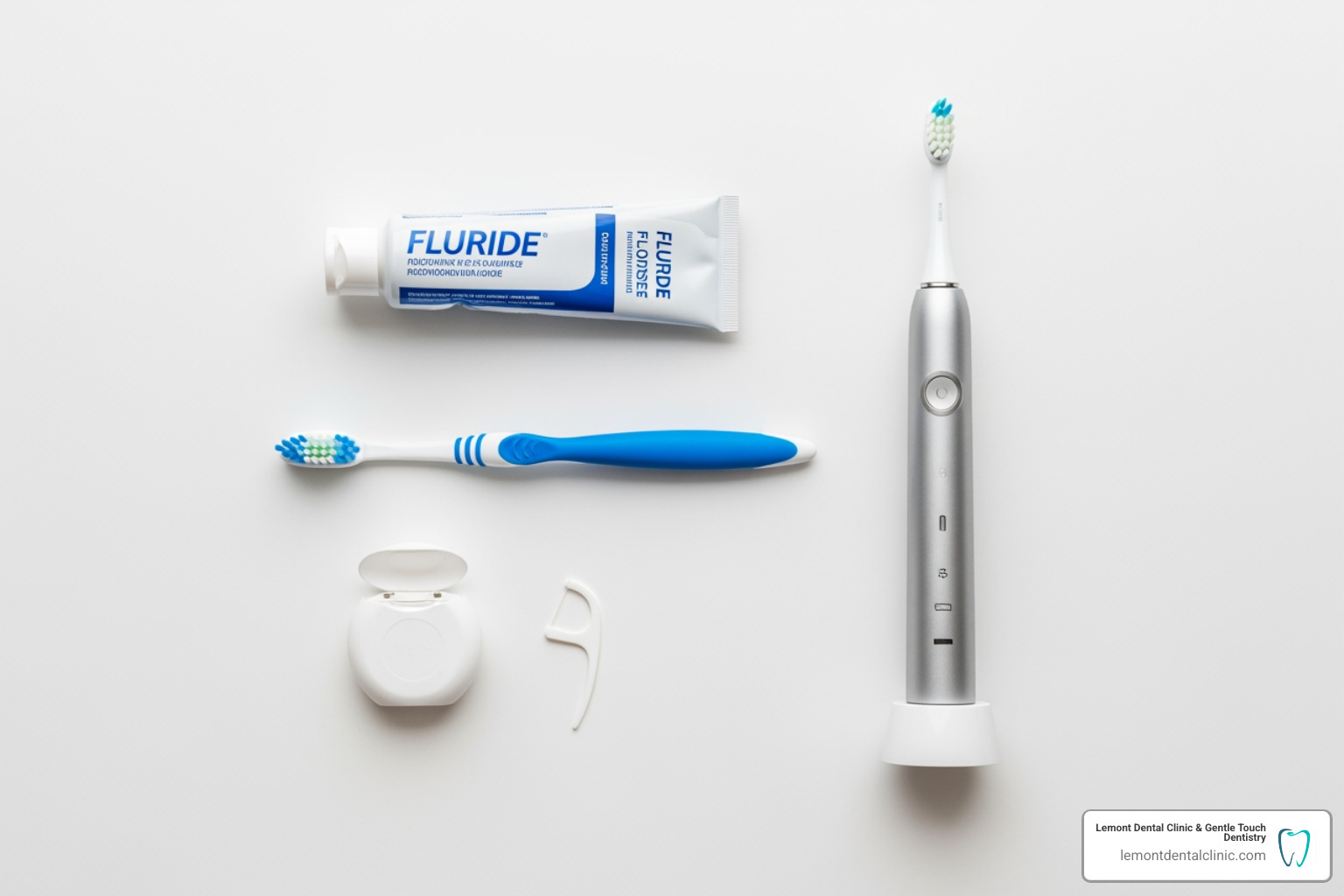
Having the right tools is the first step in learning how to brush your teeth properly. Your toothbrush, toothpaste, and floss are the foundation of your daily routine, and choosing the right ones makes a significant difference. You don’t need expensive gadgets, just an understanding of what works.
Electric vs. Manual Toothbrush: Which is Better?
A common question we hear at Lemont Dental Clinic & Gentle Touch Dentistry is whether to use an electric or manual toothbrush. The truth is, both are equally effective with proper technique. The American Dental Association (ADA) recommends a soft-bristled brush, regardless of type, for removing plaque.
However, electric toothbrushes offer advantages that can make proper brushing easier. Many models have built-in timers to ensure you brush for the full two minutes and pressure sensors to prevent you from brushing too hard, which can damage gums and enamel. They can be particularly helpful for people with limited dexterity (like arthritis) or those with braces, as the powered head does most of the work.
Feature
Manual Toothbrush
Electric Toothbrush
Effectiveness
Highly effective with proper technique
Can be more effective due to consistent motions and speed
Timers, pressure sensors, different cleaning modes
Portability
Very portable
Can be less portable due to size and charging needs
ADA Recommendation
Equally effective if used correctly
Equally effective if used correctly
Bristle Type
Soft bristles recommended
Soft bristles recommended
The best toothbrush is the one you’ll use consistently. Technique and consistency always trump technology.
Selecting the Right Toothbrush and Toothpaste
Whether manual or electric, always choose a toothbrush with soft bristles. Medium and hard bristles can cause gum recession and enamel abrasion over time. A small head size is also important for reaching all areas, like the backs of your molars. Look for the ADA Seal of Acceptance on packaging, which certifies the product is safe and effective.
The most critical ingredient in toothpaste is fluoride. This mineral strengthens enamel, makes it more resistant to acid attacks, and can even reverse early decay. For more on this, see our page on Fluoridation.
Adults: Use toothpaste with at least 1,350 parts per million (ppm) fluoride.
Children under 3: Use a smear (the size of a grain of rice) of toothpaste with at least 1,000 ppm fluoride.
Children 3 to 6: Use a pea-sized amount of toothpaste with 1,350-1,500 ppm fluoride. Supervise young children to ensure they don’t swallow toothpaste.
While specialized toothpastes for whitening or sensitivity can be helpful, ensure they contain adequate fluoride. Finally, don’t forget dental floss or interdental brushes, as they are essential for cleaning the 40% of tooth surfaces your brush can’t reach.
The Main Event: How to Brush Your Teeth for Maximum Impact
With your tools ready, it’s time to focus on technique. Learning how to brush your teeth correctly ensures you’re actively cleaning every surface, not just going through the motions. The secret is gentle pressure and methodical coverage—we’re cleaning, not scrubbing!
What is the proper technique for how to brush your teeth?
The goal is to remove plaque and food debris from every tooth without damaging your gums or enamel. Most people rush, focusing only on the front teeth and leaving other areas vulnerable.
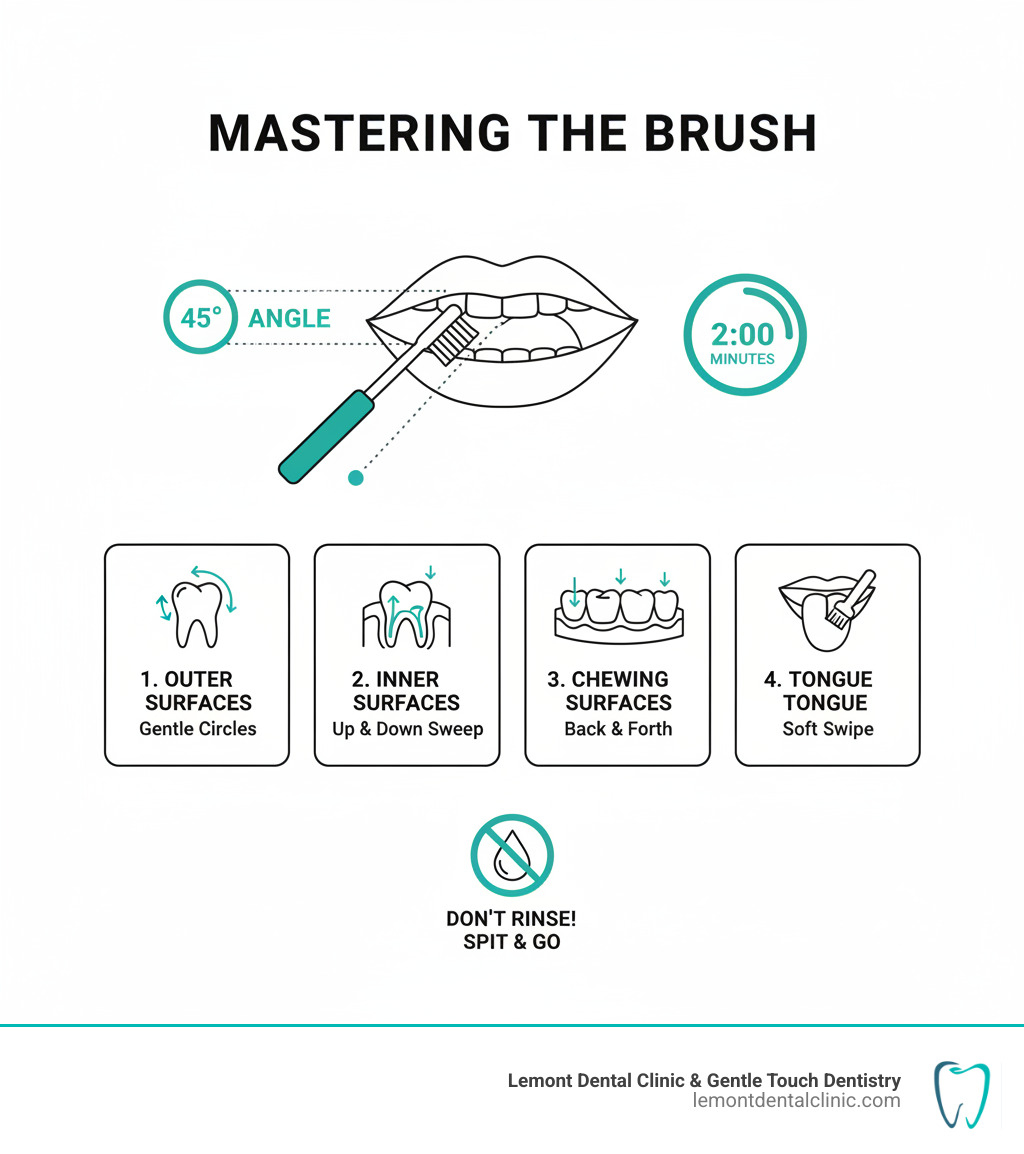
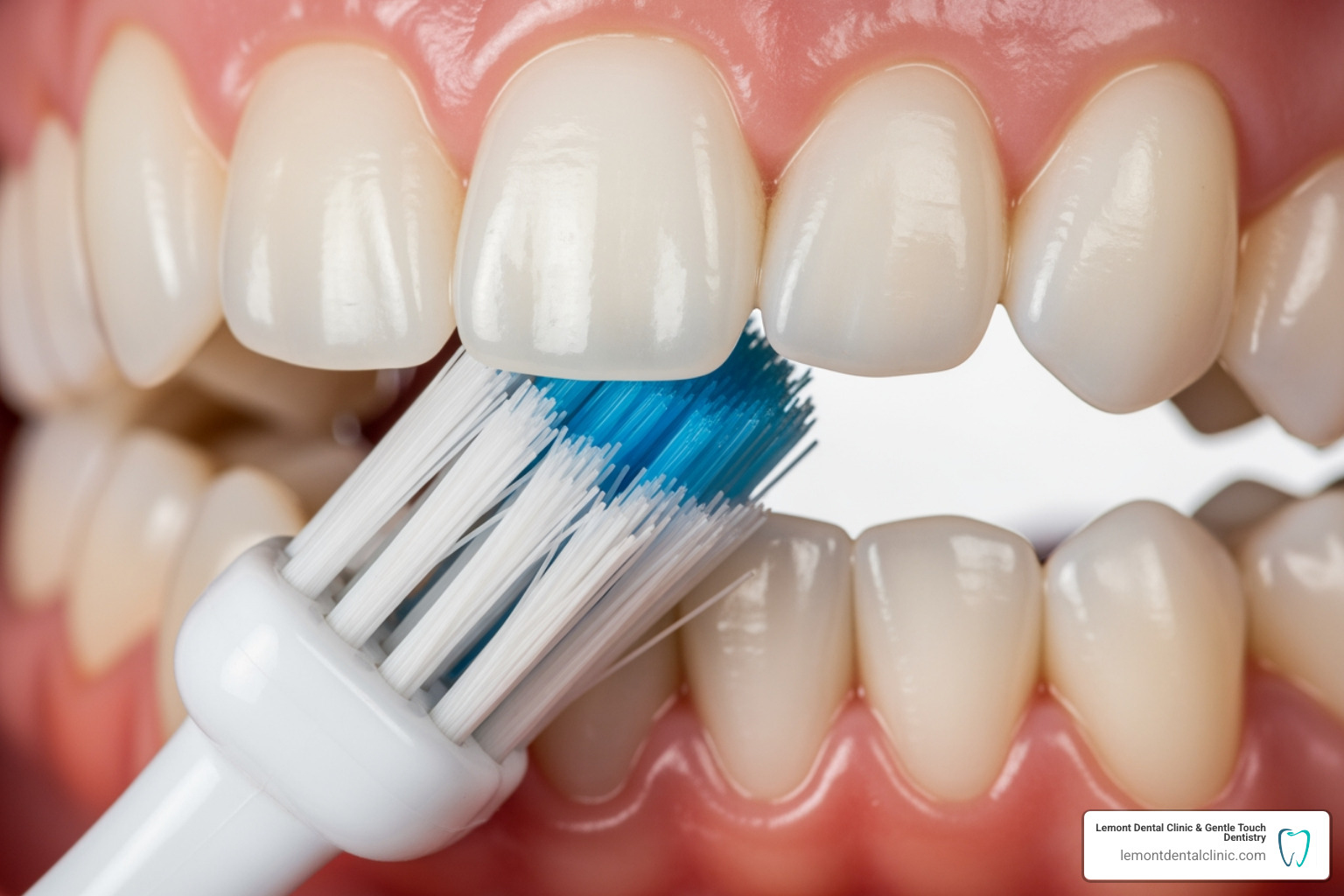
Apply a pea-sized amount of fluoride toothpaste. The most crucial step is to place your toothbrush at a 45-degree angle to your gums. This specific angle allows the bristles to clean both the tooth surface and the area just beneath the gumline, where plaque accumulates.
Use short, tooth-wide strokes or small circular motions. Think of it as massaging your teeth and gums. Aggressive brushing can cause gum recession and sensitivity.
Clean all surfaces systematically. Start with the outer surfaces of your upper, then lower teeth. Move to the inner surfaces. For the inside of your front teeth, tilt the brush vertically and use up-and-down strokes with the tip.
Finish with the chewing surfaces of your molars, using short back-and-forth strokes to clean the grooves.
A pro tip is to divide your mouth into four quadrants and spend 30 seconds on each, for a total of two minutes. Using a timer helps ensure you don’t rush. This methodical approach guarantees no tooth is left behind.
Don’t Forget Your Tongue
Your tongue’s rough surface can harbor odor-causing bacteria, food debris, and dead cells, often being the culprit behind bad breath even after brushing. Gently brushing your tongue or using a tongue scraper can remove this buildup, leaving your mouth feeling fresher and cleaner.
After brushing your teeth, use a few gentle strokes from back to front on your tongue. Don’t press too hard. If you have a sensitive gag reflex, start closer to the front and work your way back as you get comfortable.
Perfecting Your Routine: Timing, Frequency, and Common Pitfalls
Now that you have the technique, let’s build the habits that make it count. Mastering how to brush your teeth involves knowing the “when” and “how often,” and recognizing common mistakes that can undermine your efforts.
How Long and How Often Should You Brush?
The rule is simple: brush twice a day for two minutes each time. This is the time needed to thoroughly clean all tooth surfaces. Most people brush for less than a minute, so using a timer on your phone or an electric toothbrush is a great way to ensure you hit the two-minute mark.
Brushing last thing before bed is non-negotiable. Saliva production, which helps neutralize acid and wash away food, drops during sleep. Brushing before bed removes the day’s plaque, protecting your vulnerable teeth overnight. Your second brushing should be in the morning or after a meal during the day.
When is the Best Time to Brush?
While it seems logical to brush immediately after eating, you should wait. Acidic foods and drinks (like soft drinks, citrus fruits, and sports drinks) temporarily soften tooth enamel. Brushing during this softened state can scrub away tooth structure.
Wait at least 30 to 60 minutes after consuming acidic items before brushing. This gives your saliva time to neutralize the acids and re-harden your enamel. If you want to clean your mouth sooner, simply rinse with plain water.
Are You Brushing Too Hard?
A common mistake is thinking that brushing harder means cleaner teeth. Aggressive brushing causes real damage, including gum recession, tooth sensitivity, and enamel abrasion. This can expose the sensitive root of the tooth, causing pain and wearing notches into your teeth near the gumline.
Check your toothbrush: if the bristles are frayed and splayed long before three months, you’re pressing too hard. The solution is to use a soft-bristled brush and focus on gentle, circular motions. Let the bristles do the work, not your arm. An electric toothbrush with a pressure sensor can also help you learn the right amount of force.
How Often to Replace Your Toothbrush
A worn-out toothbrush is ineffective. Replace your toothbrush every three to four months, or sooner if the bristles are frayed, bent, or splayed. It’s also wise to get a new toothbrush after you’ve been sick with a cold, flu, or other infection to prevent reinfection.
During your regular Check-ups at Lemont Dental Clinic & Gentle Touch Dentistry, we can assess your toothbrush and offer personalized advice.
Beyond the Brush: Flossing, Rinsing, and Special Considerations
Mastering how to brush your teeth is foundational, but a complete oral hygiene routine includes more. To achieve peak oral health, you must clean the areas your toothbrush can’t reach and consider other helpful tools.
The Crucial Role of Flossing
If you don’t floss, you’re missing over a third of your tooth surfaces. Your toothbrush can’t reach between teeth or under the gumline, leaving these areas vulnerable to plaque buildup, which leads to cavities and gum disease. Daily flossing disrupts this plaque before it hardens into tartar, which can only be removed with a Regular Cleaning.
To floss correctly, use the “C-shape” method. Take about 18 inches of floss, wrap most of it around one middle finger, and a small amount around the other. Gently guide the floss between your teeth—never snap it. Curve the floss into a “C” against one tooth and slide it into the space between the gum and tooth. Move it up and down to scrape off plaque, then repeat on the adjacent tooth. If your gums bleed at first, it’s common and should stop within a few days of consistent flossing.
How to brush your teeth effectively with braces?
Braces create new hiding spots for plaque, making oral hygiene more challenging but also more critical. The key is diligence.
Frequency: Brush after every meal and snack, or at least four times a day. Always use a soft-bristled toothbrush.
Technique: Angle your brush to clean above and below the brackets and wires. Use gentle, circular motions on all tooth surfaces, paying special attention to the area around each bracket.
Specialized Tools: An interdental brush (proxabrush) is excellent for cleaning between brackets and under the archwire. For flossing, use floss threaders or orthodontic floss with a stiff end to get under the wire, then use the C-shape method.
This routine prevents plaque buildup and white spots that can appear after braces are removed.
Should You Use Mouthwash?
Mouthwash is a helpful supplement, but not a replacement for brushing and flossing. A fluoride mouthwash is often the best choice for extra cavity prevention. However, timing is key: do not use it immediately after brushing, as this will rinse away the concentrated fluoride from your toothpaste.
Instead, use mouthwash at a different time, like after lunch. After rinsing, avoid eating or drinking for at least 30 minutes to allow the fluoride to work.
Why You Shouldn’t Rinse with Water Immediately
This may feel counterintuitive, but rinsing with water immediately after brushing reduces the effectiveness of your fluoride toothpaste. The toothpaste is designed to leave a protective layer of fluoride on your enamel. Rinsing washes this beneficial layer away.
The better approach is to simply spit out any excess toothpaste and let the remaining fluoride continue to protect your teeth. This small change significantly boosts your cavity prevention efforts.
Conclusion: Your Path to a Healthier Smile
You’ve made it through our complete guide to how to brush your teeth properly, and I hope you’re feeling empowered to take control of your oral health. From the proper 45-degree angle and two-minute timing to the partnership between brushing and flossing, you now have all the tools and knowledge you need to protect your smile every single day.
Here’s the truth: consistency is everything. The most perfect brushing technique in the world won’t help if you only use it occasionally. Make these habits non-negotiable parts of your day – brush twice daily for two minutes with fluoride toothpaste, floss once a day, and don’t rinse immediately after brushing. These simple actions are your strongest defense against plaque, cavities, gum disease, and even those broader health conditions we discussed earlier.
Think of your toothbrush and floss as partners in crime prevention – dental crime, that is! Your toothbrush tackles the broad surfaces, while floss sneaks into those tight spaces between teeth where trouble loves to hide. Together, they form a powerful team that keeps your mouth healthy between professional visits.
And speaking of professional care, let’s be clear: while your home routine is absolutely crucial, it’s not the whole picture. Even the most diligent brushers need professional cleanings to remove hardened tartar and catch potential problems before they become expensive, painful issues. At Lemont Dental Clinic & Gentle Touch Dentistry, we view ourselves as your partners in oral health. Our experienced doctors use the latest technology to provide comprehensive general and restorative dental care, combining quality with affordability.
We’re here in Lemont and Palos Hills, IL, ready to support your journey to optimal oral health. Whether you need a routine cleaning, have questions about your technique, or want to address a specific concern, our team is committed to helping you maintain that healthy, confident smile you deserve.
Ready to take the next step? Schedule your next regular cleaning with us today. Let’s work together to keep your smile healthy and bright for years to come. After all, you’ve learned how to brush your teeth like a pro – now let us help you maintain those excellent results with professional care!